
Bringing new leads and existing contacts into one sales process
We run acquisition and follow-up for an advisory practice: paid ads for new leads, ongoing reactivation of existing leads, social and search work, and the website, CRM, booking and calling tools that connect them.
New prospects, and a list worth returning to
The practice needed new prospects and a way back to people already in its records. Both depend on the same chain: a useful website, captured inquiries, a customer database (CRM), follow-up, booking and calls.
We built that chain and run the commercial work on it. Paid acquisition and existing-lead reactivation run side by side as ongoing work, each with its own follow-up.
- Industry
- Advisory practice
Ads that carry their answers into the CRM
Advertising generates new leads, and the capture path carries each lead-form answer into the CRM. The campaign's first response and the next conversation share the same record.
Follow-up workflows, booking and the calling handoff give staff a place to continue from there.
Returning to existing leads
Existing-lead reactivation is ongoing commercial work, run separately from new-lead acquisition. Source imports and duplicate matching bring older records together with each record's origin attached.
Selected records move into the calling system once, without duplicates, and records that need another look are held apart. New and existing leads keep their own follow-up.
Social work with a clear audience
Social management covers the company page on a professional network and the wider social presence. The planning starts with practical questions: who the practice wants to reach, which subjects help them and how a post moves someone toward a conversation.
Answers for search and AI tools
Search and AI-discovery work uses service education and planning tools to answer the questions buyers bring. Publishing support gives those answers a lasting home on the site.
Useful answers before the first conversation
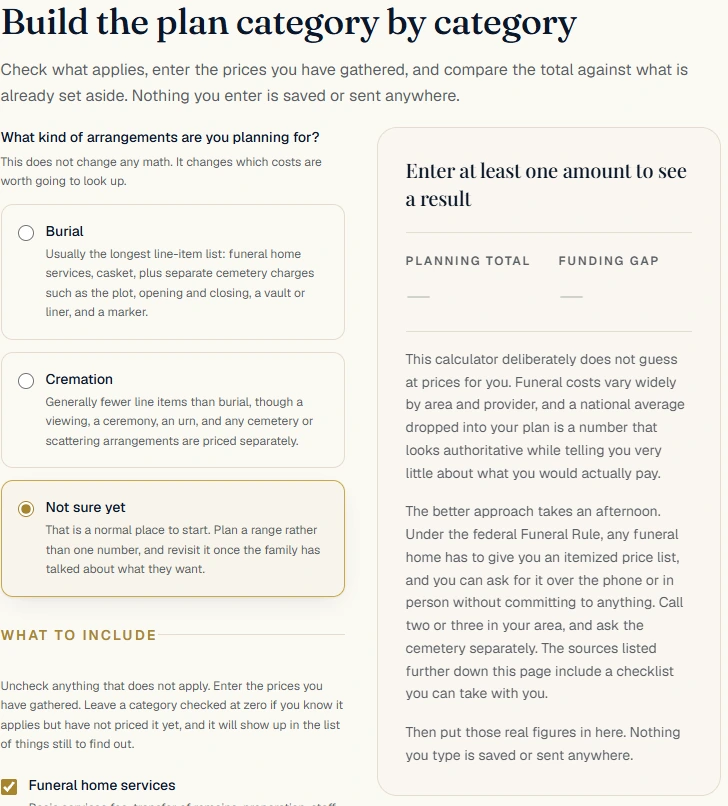
Service pages and planning tools give visitors real context before they reach out. A visitor can work through a decision category by category, see what applies to them and decide whether to talk it over.
The planning tools share one content map with the service pages and explainers, so a conversation can begin from a question the visitor has already thought through.
Saving the inquiry first, then offering a time
The inquiry path asks a short set of questions and keeps the answers in the customer record. Visitors see a clear confirmation that their inquiry is saved, and optional booking comes after that.
A visitor who is not ready to pick a time has still reached the practice, and the team has their answers to prepare from.
Keeping where each lead came from
The team also gets a notice for each new inquiry.
Tags are added rather than replaced, and notes stay specific to their source, so later activity on a record keeps how that person first arrived.
A calling workspace that keeps context in view
We built a calling workspace that places each contact's source and the relevant offer beside the call. The person making the call can see why this contact is on the list before saying hello.
An approval step comes before moving to the next contact, leaving room to add notes or finish a follow-up.
A site that holds together as it grows
Service pages, planning tools and explainers share a clear content map. Page descriptions, sitemap entries and structured page data point to the same site identity, and the move to a new web address kept old page paths working through same-path redirects.
New work arrives through a publishing receiver that stores it, moves approved images into the site's own storage and publishes through a job that can be picked up again if a step fails.
What we built
- Paid lead generation, with lead-form answers carried into the CRM.
- Ongoing reactivation of existing leads, with source-aware imports, duplicate matching and single transfers into the calling system.
- Company-page and wider social management planned around audience and subjects.
- Search and AI-discovery content built on service education and planning tools.
- A public service website with planning tools and explainers.
- A short inquiry path that saves answers to the customer record before offering optional booking.
- A calling workspace with each contact's source, the relevant offer and an approval step before the next contact.
- Same-path redirects and a recoverable publishing flow for the site.
Related services
Industry
Tell us what the business needs next.
Share what your customers and team need to do, and we will suggest a first step that fits.
We reply within one business day.